How many times have you heard someone in your team or department say,
“It’s not my fault”? What about this one? “That’s not my job.” And
I’ll bet you’ve heard,” ‘They’ didn’t get me what I needed,” and “Why
does management keep doing these silly things?” Comments like these are
everywhere in most of our organizations. Perhaps you have even said
something like this yourself. After all, YOU aren’t responsible for
everything that does on…or are you?What Is Personal Responsibility?
QBQ!
The Question Behind the Question, is a great little book on personal
accountability. Author John G. Miller makes a great case for why and
how everything that touches our lives is our responsibility. We always
have a choice of how we will react. We can take the easy way out by
blaming others and absolving ourselves of responsibility. It gets us
off the hook and justifies our lack of action.
In any situation,
challenge, or obstacle we encounter we get to choose what we think about
that situation. To believe you have no choice is to become a “victim”
with no control. A victim says, “It’s their fault,” or “It’s not my
problem.” Victims ask themselves questions like: “Why me?” or “When
are ‘they’ going to shape up?” By thinking such thoughts, you
rationalize your lack of action, and you remain a victim—blameless, but
helpless. In every situation in life, we have as much control as we
allow ourselves to take.
The way to feel as if we have greater
control is to not allow ourselves to begin thinking like a victim. We
need have different thoughts and ask ourselves better
questions—questions that lead us to action, not to complaints or passing
the buck. Rather than complaining about things beyond your control,
think about how you can be so good and so effective in your role that it
doesn’t matter how many barriers there are—you will still find ways to
move forward. Despite obstacles, you can take action. This is the
belief of a winner and the action of a leader who is going places.
Personal Responsibility: An Example
I
was recently shopping in a large mall and found a pair of shoes that I
really wanted in a shoe store there. They looked great and were just
the right color. Unfortunately, the store did not have them in my size.
The smaller size was just a bit too tight, and the larger size was too
loose. The sales clerk was very pleasant and really took an interest,
which is unusual these days, in itself. She told me of two other stores
she knew that carried the same brand; one store was at the other end of
the mall, the other was located in a strip mall several blocks away.
Then
she said something that really surprised me, “Let me call them for
you,” and before I could even protest she was looking up the number of
the first store. She called the first store and was put on hold for
several minutes before someone finally told her they did not have my
desired style and size. Undaunted, she called the other store and
actually found the exact shoe in the size I needed! When she got off
the phone and told me her good news, she seemed genuinely happy to be of
service. I thanked her profusely and went directly to that store to
buy my shoes.
Her name was Kelly. I made sure I remembered it.
Why did she help me out like that? It wasn’t her job. She wasn’t the
store manager, and she didn’t make a commission on that sale. She
didn’t know me and didn’t know whether I would ever come in her store
again. She did not have to do what she did, but because she took
personal responsibility for satisfying my needs, she has now produced a
loyal customer. I’ll check her store first next time I need shoes.
How Can You Apply This Idea?
Maybe
you are not in a direct customer service role for external customers,
so you are trying to believe you can’t act like Kelly in my story.
Wrong! Everyone you work with each day inside your organization or out
(your boss, your colleague, your employee, and yes, your external
customer, too) is your customer.
Think of some challenge you
currently face at work. It could even be something in your personal
life. Stop whining or making excuses for why it’s not working out.
Right now, take personal responsibility for moving things in the
direction you want them to go. Think of some small action you can take.
Conquer your tendency to say, “Well, there’s nothing I can do about
it,” by taking a new perspective. To take responsibility and be an
outstanding leader always ask yourself the following kinds of questions:
• How can I make a difference here?
• What can I personally do now to move this situation in the right direction?
• How can I take action in the current situation rather than wait for others?
You
can be successful and shine at work and at home if you think in terms
of “I,” not “they” and in terms of action, rather than complacency
Sunday, April 29, 2012


Monday, March 21, 2011
EASY VS. DIFFICULT
Easy is to judge the mistakes of others Difficult is to recognize our own mistakes
Easy is to talk without thinking Difficult is to refrain the tongue
Easy is to hurt someone who loves us. Difficult is to heal the wound...
Easy is to forgive others Difficult is to ask for forgiveness
Easy is to set rules. Difficult is to follow them...
Easy is to dream every night. Difficult is to fight for a dream...
Easy is to show victory. Difficult is to assume defeat with dignity...
Easy is to admire a full moon. Difficult to see the other side...
Easy is to stumble with a stone. Difficult is to get up...
Easy is to enjoy life every day. Difficult to give its real value...
Easy is to promise something to someone. Difficult is to fulfill that promise...
Easy is to say we love. Difficult is to show it every day...
Easy is to criticize others. Difficult is to improve oneself...
Easy is to make mistakes. Difficult is to learn from them...
Easy is to weep for a lost love. Difficult is to take care of it so not to lose it.
Easy is to think about improving. Difficult is to stop thinking it and put it into action...
Easy is to think bad of others Difficult is to give them the benefit of the doubt...
Easy is to receive Difficult is to give
Easy to read this Difficult to follow
Easy is keep the friendship with words Difficult is to keep it with meanings
Sunday, January 16, 2011
Do it beacause it is the right thing to do...
A young, 18-year-old student was struggling to pay his fees while he was studying at Stanford University in 1892. He was an orphan, and not knowing where to turn for money, he came up with a bright idea. A friend and he decided to host a musical concert on campus to raise money for their education.
They reached out to the great pianist Ignacy J. Paderewski - who was quite a superstar those days. His manager demanded a guaranteed fee of $2000 for the piano recital. A deal was struck. And the boys began to work to make the concert a success.
The big day arrived. Paderewski performed at Stanford. But unfortunately, they had not managed to sell enough tickets. The total collection was only $1600.

Disappointed, they went up to Paderewski and explained their plight. They gave him the entire $1600, plus a cheque for the balance $400. They promised to honour the cheque soonest possible.
"No way!" said Paderewski. "This is just not acceptable!" He tore up the cheque, returned the $1600 and told the two boys "Here's the $1600. Please deduct whatever expenses you have incurred. Keep the money you need for your fees. And just give me whatever is left!" The boys were surprised, and quite overjoyed. They thanked him profusely.
It was a small act of kindness. But it clearly marked out Paderewski as a great human being. Someone special. He would have been within his rights to demand his "guaranteed money".
The truly great people think, "If I don't help them, what will happen to them?". Most only think of themselves, the loss they might incur, the trouble they might have to go through and the sacrifice they need to make.
The great men don't think of themselves. They think of the difference it could make to other people. And that's what drives their actions. They help not because someone else is watching, or because it will look good when the world comes to know about it. They don't do it expecting something in return.
They do it because they feel it's the right thing to do.
It may not surprise you to know that Paderewski went on to become the Prime Minister of Poland. He was a great leader, but unfortunately when the World War began, Poland was ravaged. There were over 1.5 million people starving in his country, and no money to feed them. Paderewski did not know where to turn for help.
He reached out to the US Food and Relief Administration for help. The head there was a man called Herbert Hoover - who later went on to become the US President. Hoover agreed to help and quickly shipped tons of food grains to feed the starving Polish people. A calamity was averted.
Paderewski was relieved! He decided to go across to meet Hoover and personally thank him.
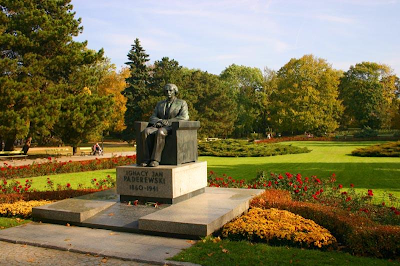
When Paderewski began to thank Hoover for his noble gesture, Hoover quickly interjected and said, "You shouldn't be thanking me Mr. Prime Minister. You may not remember this, but several years ago, you helped two young students go through college in the US. I was one of them."
It is rightly said that you can achieve everything you want in life if only you help other people achieve what they want in their lives.
Forwarded by Mr.R. Ramakrishnan.
They reached out to the great pianist Ignacy J. Paderewski - who was quite a superstar those days. His manager demanded a guaranteed fee of $2000 for the piano recital. A deal was struck. And the boys began to work to make the concert a success.
The big day arrived. Paderewski performed at Stanford. But unfortunately, they had not managed to sell enough tickets. The total collection was only $1600.

Disappointed, they went up to Paderewski and explained their plight. They gave him the entire $1600, plus a cheque for the balance $400. They promised to honour the cheque soonest possible.
"No way!" said Paderewski. "This is just not acceptable!" He tore up the cheque, returned the $1600 and told the two boys "Here's the $1600. Please deduct whatever expenses you have incurred. Keep the money you need for your fees. And just give me whatever is left!" The boys were surprised, and quite overjoyed. They thanked him profusely.
It was a small act of kindness. But it clearly marked out Paderewski as a great human being. Someone special. He would have been within his rights to demand his "guaranteed money".
The truly great people think, "If I don't help them, what will happen to them?". Most only think of themselves, the loss they might incur, the trouble they might have to go through and the sacrifice they need to make.
The great men don't think of themselves. They think of the difference it could make to other people. And that's what drives their actions. They help not because someone else is watching, or because it will look good when the world comes to know about it. They don't do it expecting something in return.
They do it because they feel it's the right thing to do.
It may not surprise you to know that Paderewski went on to become the Prime Minister of Poland. He was a great leader, but unfortunately when the World War began, Poland was ravaged. There were over 1.5 million people starving in his country, and no money to feed them. Paderewski did not know where to turn for help.
He reached out to the US Food and Relief Administration for help. The head there was a man called Herbert Hoover - who later went on to become the US President. Hoover agreed to help and quickly shipped tons of food grains to feed the starving Polish people. A calamity was averted.
Paderewski was relieved! He decided to go across to meet Hoover and personally thank him.

When Paderewski began to thank Hoover for his noble gesture, Hoover quickly interjected and said, "You shouldn't be thanking me Mr. Prime Minister. You may not remember this, but several years ago, you helped two young students go through college in the US. I was one of them."
It is rightly said that you can achieve everything you want in life if only you help other people achieve what they want in their lives.
Forwarded by Mr.R. Ramakrishnan.
Saturday, November 20, 2010
Appreciation v/s entitlements
One young academically excellent person went to apply for a managerial position in a big company. He passed the first interview, the director did the last interview, made the last decision. The director discovered from the CV that the youth's academic achievements were excellent all the way, from the secondary school until the postgraduate research, never had a year when he did not score high.
The director asked, "Did you obtain any scholarships in school?" the youth answered "none".
The director asked, " Was it your father who paid for your school fees?" The youth answered, "My father passed away when I was one year old, it was my mother who paid for my school fees.
The director asked, " Where did your mother work?" The youth answered, "My mother worked as clothes cleaner. The director requested the youth to show his hands. The youth showed a pair of hands that were smooth and perfect.
The director asked, " Have you ever helped your mother wash the clothes before?" The youth answered, "Never, my mother always wanted me to study and read more books. Furthermore, my mother can wash clothes faster than me.
The director said, "I have a request. When you go back today, go and clean your mother's hands, and then see me tomorrow morning.*
The youth felt that his chance of landing the job was high. When he went back, he happily requested his mother to let him clean her hands. His mother felt strange, happy but with mixed feelings, she showed her hands to the kid.
The youth cleaned his mother's hands slowly. His tear fell as he did that. It was the first time he noticed that his mother's hands were so wrinkled, and there were so many bruises in her hands. Some bruises were so painful that his mother shivered when they were cleaned with water.
This was the first time the youth realized that it was this pair of hands that washed the clothes everyday to enable him to pay the school fee. The bruises in the mother's hands were the price that the mother had to pay for his graduation, academic excellence and his future.
After finishing the cleaning of his mother hands, the youth quietly washed all the remaining clothes for his mother. That night, mother and son talked for a very long time.
Next morning, the youth went to the director's office. The Director noticed the tears in the youth's eyes, asked: " Can you tell me what have you done and learned yesterday in your house?"
The youth answered, " I cleaned my mother's hand, and also finished cleaning all the remaining clothes'. The Director asked, " please tell me your feelings."
The youth said,
Number 1: I know now what is appreciation. Without my mother, there would not the successful me today.
Number 2: By working together and helping my mother, only I now realize how difficult and tough it is to get something done.
Number 3: I have come to appreciate the importance and value of family relationship.
The director said, " This is what I am looking for to be my manager.
I want to recruit a person who can appreciate the help of others, a person who knows the sufferings of others to get things done, and a person who would not put money as his only goal in life. You are hired.
Later on, this young person worked very hard, and received the respect of his subordinates. Every employee worked diligently and as a team. The company's performance improved tremendously.
A child, who has been protected and habitually given whatever he wanted, would develop "entitlement mentality" and would always put himself first. He would be ignorant of his parent's efforts. When he starts work, he assumes that every person must listen to him, and when he becomes a manager, he would never know the sufferings of his employees and would always blame others. For this kind of people, who may be good academically, may be successful for a while, but eventually would not feel sense of achievement. He will grumble and be full of hatred and fight for more. If we are this kind of protective parents, are we really showing love or are we destroying the kid instead?*
You can let your kid live in a big house, eat a good meal, learn piano, watch a big screen TV. But when you are cutting grass, please let them experience it. After a meal, let them wash their plates and bowls together with their brothers and sisters. It is not because you do not have money to hire a maid, but it is because you want to love them in a right way. You want them to understand, no matter how rich their parents are, one day their hair will grow gray, same as the mother of that young person. The most important thing is your kid learns how to appreciate the effort and experience the difficulty and learns the ability to work with others to get things done.
***********
Source - A forwarded mail.
***********
Sunday, October 10, 2010
Do you still have the fight left in you for those dream of yours..
The second symptom of the death of our dreams lies in our certainties. Because we don’t want to see life as a grand adventure, we begin to think of ourselves as wise and fair and correct in asking so little of life. We look beyond the walls of our day-to-day existence, and we hear the sound of lances breaking, we smell the dust and the sweat, and we see the great defeats and the fire in the eyes of the warriors. But we never see the delight, the immense delight in the hearts of those who are engaged in the battle. For them, neither victory nor defeat is important; what’s important is only that they are fighting the Good Fight.

And, finally, the third symptom of the passing of our dreams is peace. Life becomes a Sunday afternoon; we ask for nothing grand, and we cease to demand anything more than we are willing to give. In that state, we think of ourselves as being mature; we put aside the fantasies of our youth, and we seek personal and professional achievement. We are surprised when people our age say that they still want this or that out of life. But really, deep in our hearts, we know that what has happened is that we have renounced the battle for our dreams – we have refused to fight the Good Fight.
When we renounce our dreams and find peace, we go through a short period of tranquility. But the dead dreams begin to rot within us and to infect our entire being.
We become cruel to those around us, and then we begin to direct this cruelty against ourselves. That’s when illnesses and psychoses arise. What we sought to avoid in combat – disappointment and defeat – come upon us because of our cowardice.
And one day, the dead, spoiled dreams make it difficult to breathe, and we actually seek death. It’s death that frees us from our certainties, from our work, and from that terrible peace of our Sunday afternoons
-Words from Petrus to me during The pilgrimage to Santiago de Compostela by Paulo Coelho.
A lesson learnt
One old man was sitting with his 25 years old son in the train.
Train is about to leave the station.
All passengers are settling down their seat.
As train started young man was filled with lot of joy and curiosity
He was sitting on the window side.
He went out one hand and feeling the passing air. He shouted, "Papa see all trees are going behind".
Old man smile and admired son feelings.
Beside the young man one couple was sitting and listening all
the conversion between father and son.
They were little awkward with the attitude of 25 years old man behaving like a small child.
Suddenly young man again shouted, "Papa see the pond and animals. Clouds are moving with train".
Couple was watching the young man in embarrassingly.
Now its start raining and some of water drops touches the young man's hand.
He filled with joy and he closed the eyes.
He shouted again," Papa it's raining, water is touching me, see papa".
Couple couldn't help themselves and ask the old man.
"Why don't you visit the Doctor and get treatment for your son."
Old man said,
" Yes, We are coming from the hospital as Today only my son got his eye sight for first time in his life".
Moral: "Don’t draw conclusions until you know all the facts"
Sunday, September 12, 2010
Chanakya Quotes
“A person should not be too honest.
Straight trees are cut first
And Honest people are screwed first.”
“Even if a snake is not poisonous,
It should pretend to be venomous.”
“The biggest guru-mantra is: Never share your secrets with anybody. ! It will destroy you.”
“There is some self-interest behind every friendship.
There is no Friendship without self-interests.
This is a bitter truth.”
“Before you start some work, always ask yourself three questions – Why am I doing it, What the results might be and Will I be successful. Only when you think deeply
And find satisfactory answers to these questions, go ahead.”
“As soon as the fear approaches near, attack and destroy it.”
“Once you start a working on something,
Don’t be afraid of failure and
Don’t abandon it.
People who work sincerely are the happiest.”
“The fragrance of flowers spreads
Only in the direction of the wind.
But the goodness of a person spreads in all direction.”
“A man is great by deeds, not by birth.”
“Treat your kid like a darling for the first five years.
For the next five years, scold them.
By the time they turn sixteen, treat them like a friend.
Your grown up children are your best friends.”
“Books are as useful to a stupid person
As a mirror is useful to a blind person.”
“Education is the best friend.
An educated person is respected everywhere.
Education beats the beauty and the youth.”
Subscribe to:
Posts (Atom)